Life Skills Section Weightage & Exam Scheme
In UP Super TET 2026 (Advt. No. 05/2026), Life Skills (जीवन कौशल एवं प्रबंधन) carries 8 multiple-choice questions worth 24 marks (+3 marks per correct response, -1 mark penalty for incorrect response).
This subject moves beyond theoretical child psychology to evaluate your real-world instincts as an educator: professional codes of conduct, conflict resolution, emotional intelligence, and democratic ethical stewardship in primary schools.
The Multifaceted Roles of the Modern Teacher
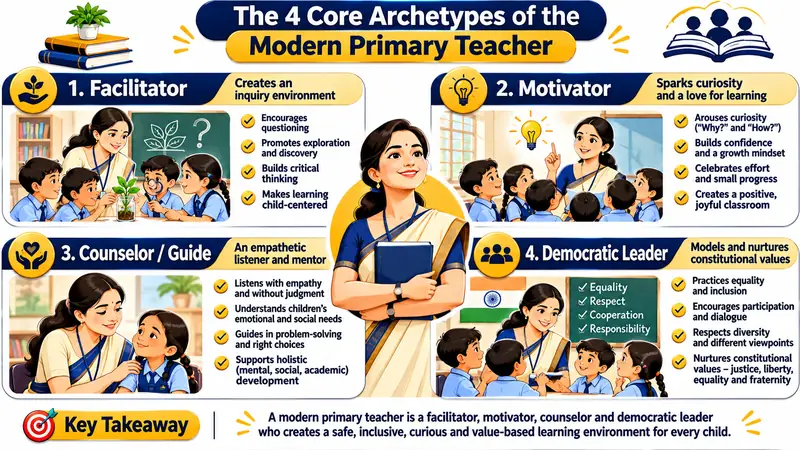
The National Curriculum Framework (NCF) fundamentally redefined the role of a school teacher from an authoritative lecturer to an empathetic guide:
| Teacher Archetype | Primary Pedagogical Function | Real Classroom Application |
|---|---|---|
Facilitator (सुविधादाता) | Creates an optimal learning environment | Provides resources, prompts inquiry, and steps back so children construct their own understanding. |
Motivator (प्रेरक) | Sparks intrinsic curiosity | Uses positive reinforcement, praise, and curiosity hooks rather than threats of marks or failure. |
Counselor / Guide (मार्गदर्शक) | Addresses emotional & behavioral needs | Listens empathetically to child anxieties, home conflicts, and learning frustrations without judgment. |
| Leader & Role Model (नेतृत्वकर्ता) | Exemplifies constitutional values | Models punctuality, fairness, gender neutrality, and rational scientific temperament daily. |
Professional Conduct & Constitutional Values
Teachers in Uttar Pradesh basic schools are bound by the statutory Code of Professional Ethics formulated by NCTE and the State Basic Education Department:
- Non-Discrimination: Treating all students equally regardless of caste, creed, religion, gender, or socio-economic background (Article 15).
- Prohibition of Private Tuition: Section 28 of the RTE Act 2009 strictly prohibits government teachers from engaging in private tuition activities.
- Constitutional Stewardship: Instilling respect for national symbols, the Constitution of India, democratic values, and environmental responsibility (Article 51A).
Motivation Frameworks (Maslow & Intrinsic Drives)
Motivation is the central engine of learning (थार्नडाइक के अनुसार "सीखने का सर्वोत्तम राजमार्ग"):
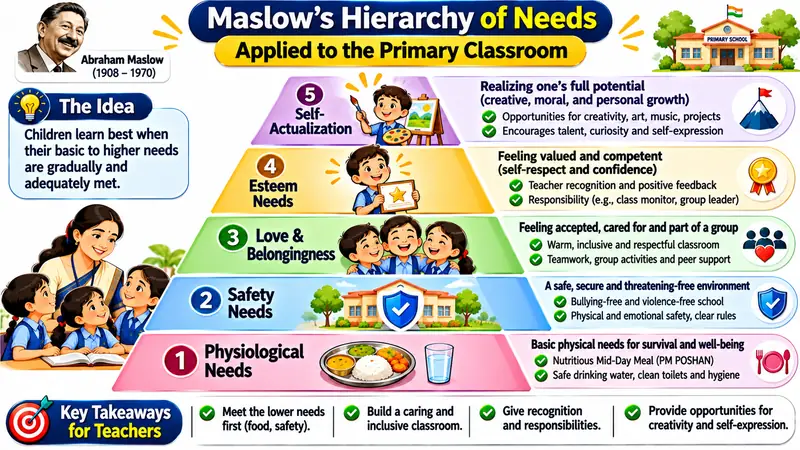
- Abraham Maslow's Hierarchy of Needs:
- Level 1 (Physiological): Hunger, thirst, sleep (Why the Mid-Day Meal scheme is critical before teaching).
- Level 2 (Safety): Physical safety and emotional security from bullying.
- Level 3 (Belongingness/Love): Acceptance by peers and teacher affection.
- Level 4 (Esteem): Respect, recognition, and self-confidence.
- Level 5 (Self-Actualization): Realizing one's highest potential and creativity.
- Intrinsic vs Extrinsic Motivation:
- Intrinsic (आंतरिक अभिप्रेरणा): Originates from personal interest, joy, and mastery. Lasts longer and creates autonomous lifelong learners.
- Extrinsic (बाह्य अभिप्रेरणा): Driven by external rewards (trophies, cash prizes) or fear of punishment. Effective for initiating action, but diminishes over time.
Rewards, Incentives & RTE Section 17 Discipline Rules
Aspirants must know the legal boundaries of discipline in Indian classrooms:
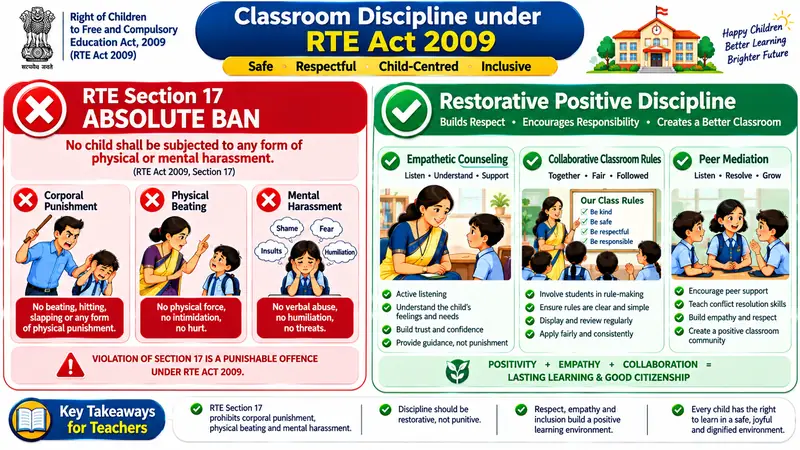
Section 17 of the Right of Children to Free and Compulsory Education (RTE) Act, 2009 absolutely bans physical punishment and mental harassment of any child. Violating this provision constitutes a cognizable offense subjecting the teacher to disciplinary and criminal proceedings.
Discipline must always be positive, restorative, and collaborative.
15 Authentic Practice MCQs with Solutions
Solve these 15 authentic Life Skills scenarios:
उत्तर एवं नैतिक व्याख्या देखें (View Solution)
सही उत्तर: (B) सुविधादाता एवं मार्गदर्शक (Facilitator)
व्याख्या: राष्ट्रीय पाठ्यचर्या रूपरेखा (NCF) और बाल-केंद्रित शिक्षा में शिक्षक की भूमिका एक सुगमकर्ता, सुविधादाता और परामर्शदाता की है।
उत्तर एवं नैतिक व्याख्या देखें (View Solution)
सही उत्तर: (C) 10
व्याख्या: WHO ने 10 प्रमुख जीवन कौशल पहचाने हैं, जिनमें स्व-जागरूकता, समानुभूति, संप्रेषण, समस्या समाधान और तनाव प्रबंधन शामिल हैं।
उत्तर एवं नैतिक व्याख्या देखें (View Solution)
सही उत्तर: (B) दूसरों की भावनाओं और दृष्टिकोण को स्वयं उनकी जगह रहकर समझना
व्याख्या: समानुभूति का अर्थ स्वयं को दूसरे व्यक्ति की परिस्थिति में रखकर उसकी पीड़ा और दृष्टिकोण का सूक्ष्म अनुभव करना है।
उत्तर एवं नैतिक व्याख्या देखें (View Solution)
सही उत्तर: (C) सांकेतिक एवं सकारात्मक पुनर्बलन के रूप में सीमित और विवेकपूर्ण प्रयोग
व्याख्या: RTE Act धारा 17 शारीरिक दंड पर पूर्ण प्रतिबंध लगाती है; केवल सकारात्मक पुनर्बलन का विवेकपूर्ण उपयोग ग्राह्य है।
उत्तर एवं नैतिक व्याख्या देखें (View Solution)
सही उत्तर: (B) आदर्शवादी एवं नैतिक मूल्यों से युक्त
व्याख्या: शिक्षक बालकों का रोल मॉडल होता है, अतः उसका आचरण संविधान सम्मत, निष्पक्ष और उच्च नैतिक मूल्यों से परिपूर्ण होना चाहिए।
उत्तर एवं नैतिक व्याख्या देखें (View Solution)
सही उत्तर: (D) आत्म-सिद्धि (Self-Actualization)
व्याख्या: मास्लो के पिरामिड में सर्वोच्च शिखर 'आत्म-सिद्धि' (Self-Actualization) की आवश्यकता है।
उत्तर एवं नैतिक व्याख्या देखें (View Solution)
सही उत्तर: (B) सक्रिय संवाद और समझौतापरक वार्ता
व्याख्या: सक्रिय संवाद, दोनों पक्षों को सुनना और आपसी सहमति से रचनात्मक समाधान निकालना ही सर्वोत्तम जीवन कौशल है।
उत्तर एवं नैतिक व्याख्या देखें (View Solution)
सही उत्तर: (B) उन्हें उत्तरदायित्व सौंपकर निर्णय प्रक्रिया में शामिल करना
व्याख्या: जब बालकों को जिम्मेदारियां दी जाती हैं और वे कक्षा के नियमों के निर्माण में भागीदार होते हैं, तब वास्तविक स्व-अनुशासन जन्म लेता है।
उत्तर एवं नैतिक व्याख्या देखें (View Solution)
सही उत्तर: (B) छात्रों को अपनी निजी ट्यूशन हेतु विवश करना
व्याख्या: सरकारी शिक्षक द्वारा छात्रों पर निजी ट्यूशन हेतु दबाव बनाना या भेदभाव करना शिक्षक आचार संहिता का गंभीर उल्लंघन है।
उत्तर एवं नैतिक व्याख्या देखें (View Solution)
सही उत्तर: (B) तत्कालीन सोवियत संघ (USSR)
व्याख्या: 42वें संविधान संशोधन 1976 द्वारा स्वर्ण सिंह समिति की सिफारिश पर सोवियत संघ (USSR) से प्रेरित होकर मौलिक कर्तव्य जोड़े गए।
उत्तर एवं नैतिक व्याख्या देखें (View Solution)
सही उत्तर: (B) गहन श्वास प्राणायाम, समय प्रबंधन और सकारात्मक आत्म-संवाद
व्याख्या: शारीरिक शिथिलीकरण, सकारात्मक पुनःमूल्यांकन और समय का उचित विभाजन तनाव नियंत्रण की प्रामाणिक विधियां हैं।
उत्तर एवं नैतिक व्याख्या देखें (View Solution)
सही उत्तर: (A) डेनियल गोलमैन
व्याख्या: 1995 में 'Emotional Intelligence: Why It Can Matter More Than IQ' पुस्तक के माध्यम से डेनियल गोलमैन ने इसे वैश्विक ख्याति दिलाई।
उत्तर एवं नैतिक व्याख्या देखें (View Solution)
सही उत्तर: (B) समस्या अथवा आवश्यकता की स्पष्ट पहचान करना
व्याख्या: वैज्ञानिक निर्णय प्रक्रिया का प्रथम चरण स्थिति अथवा समस्या का सही विश्लेषण और स्पष्ट पहचान करना है।
उत्तर एवं नैतिक व्याख्या देखें (View Solution)
सही उत्तर: (B) सहानुभूति में केवल दया भाव होता है जबकि समानुभूति में दूसरे के कष्ट को स्वयं महसूस करना होता है
व्याख्या: सहानुभूति किसी की व्यथा देखकर दया प्रकट करना है; समानुभूति उसके जूते में पैर रखकर उसकी वास्तविक पीड़ा को हृदयंगम करना है।
उत्तर एवं नैतिक व्याख्या देखें (View Solution)
सही उत्तर: (B) बाह्य अभिप्रेरक (Extrinsic Motivator)
व्याख्या: प्रशंसा, ट्रॉफी या नकद पुरस्कार बाह्य अभिप्रेरक हैं जो किसी बाह्य परिणाम की प्राप्ति हेतु प्रेरित करते हैं।
Review administrative frameworks in our Management & Attitude Guide and explore our Syllabus Map.
Frequently Asked Questions
How many marks does Life Skills carry in Super TET?
Life Skills carries 8 multiple-choice questions worth 24 marks (+3 correct, -1 penalty) under Advt. No. 05/2026.
Which section of the RTE Act prohibits corporal punishment?
Section 17 of the Right to Education (RTE) Act, 2009 strictly prohibits physical punishment and mental harassment in schools.
Who formulated the Hierarchy of Needs theory?
American psychologist Abraham Maslow formulated the Hierarchy of Needs theory in 1943, proposing that physiological and safety needs must be satisfied before higher cognitive needs can be pursued.